Explore 5 Popular Roles in the 3D Industry – Which One Fits You Best?
The modern 3D industry is far more diverse than simply “making graphics.” Behind every animated film, AAA game, cinematic trailer, or VFX sequence is a team of specialized artists working together through a complex production pipeline.
Each role within the pipeline requires different creative strengths, technical abilities, and ways of thinking. That is why one of the most important steps for beginners is not trying to master everything at once, but understanding which role best matches their personality and interests.
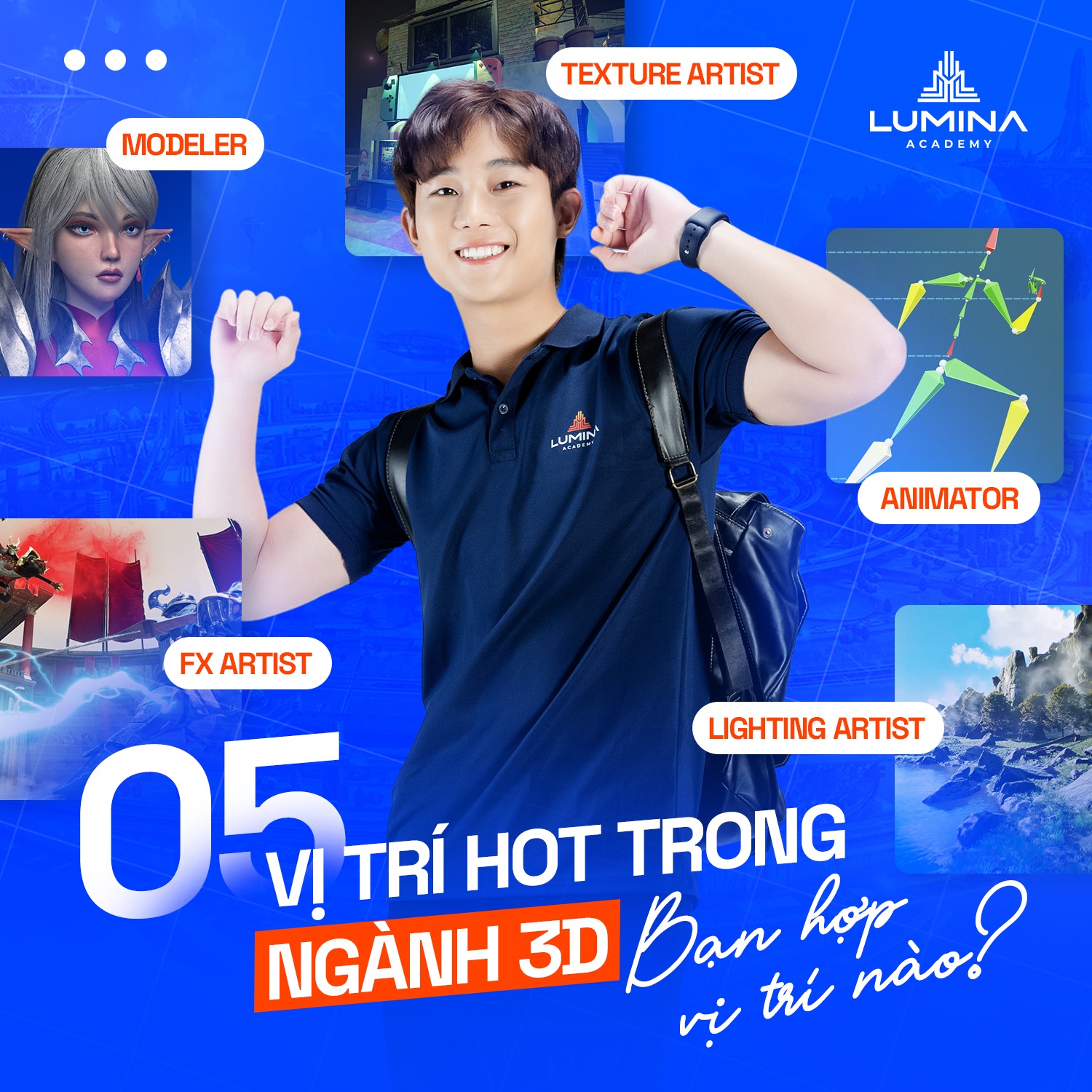
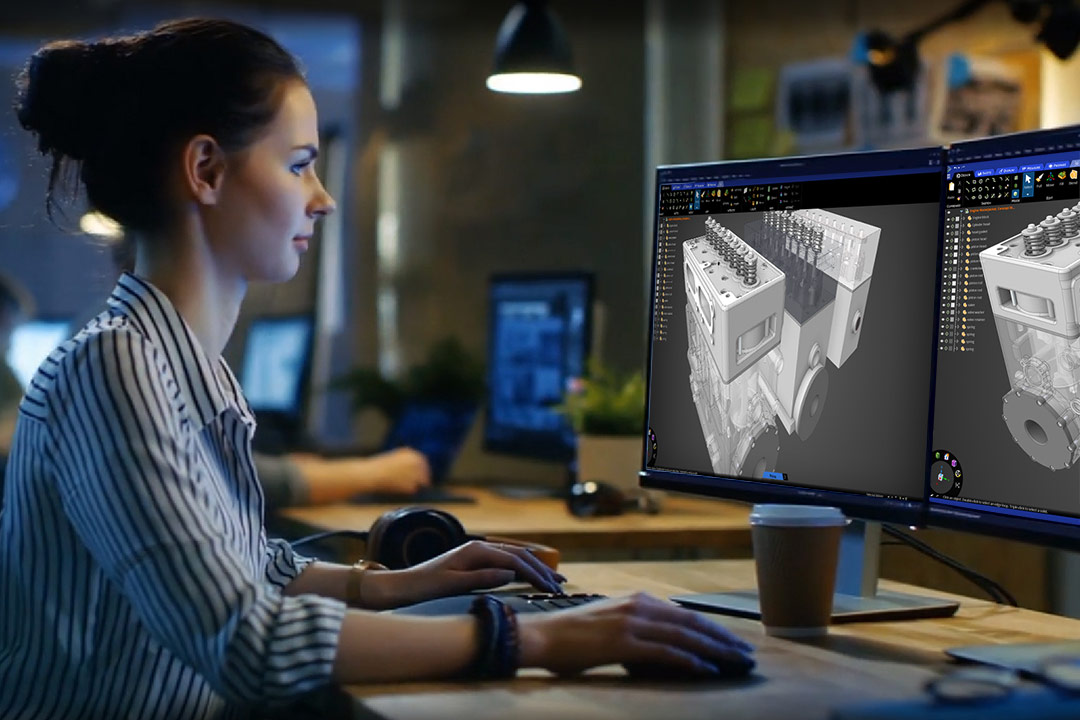
One of the most fundamental positions in 3D production is the Modeler. A 3D Modeler is responsible for building the shapes and structures of characters, environments, props, and assets used in final productions. This role requires strong spatial awareness, attention to detail, and the ability to transform 2D concepts into fully realized 3D forms. People who enjoy structure, design, and building visual forms often thrive in this position.
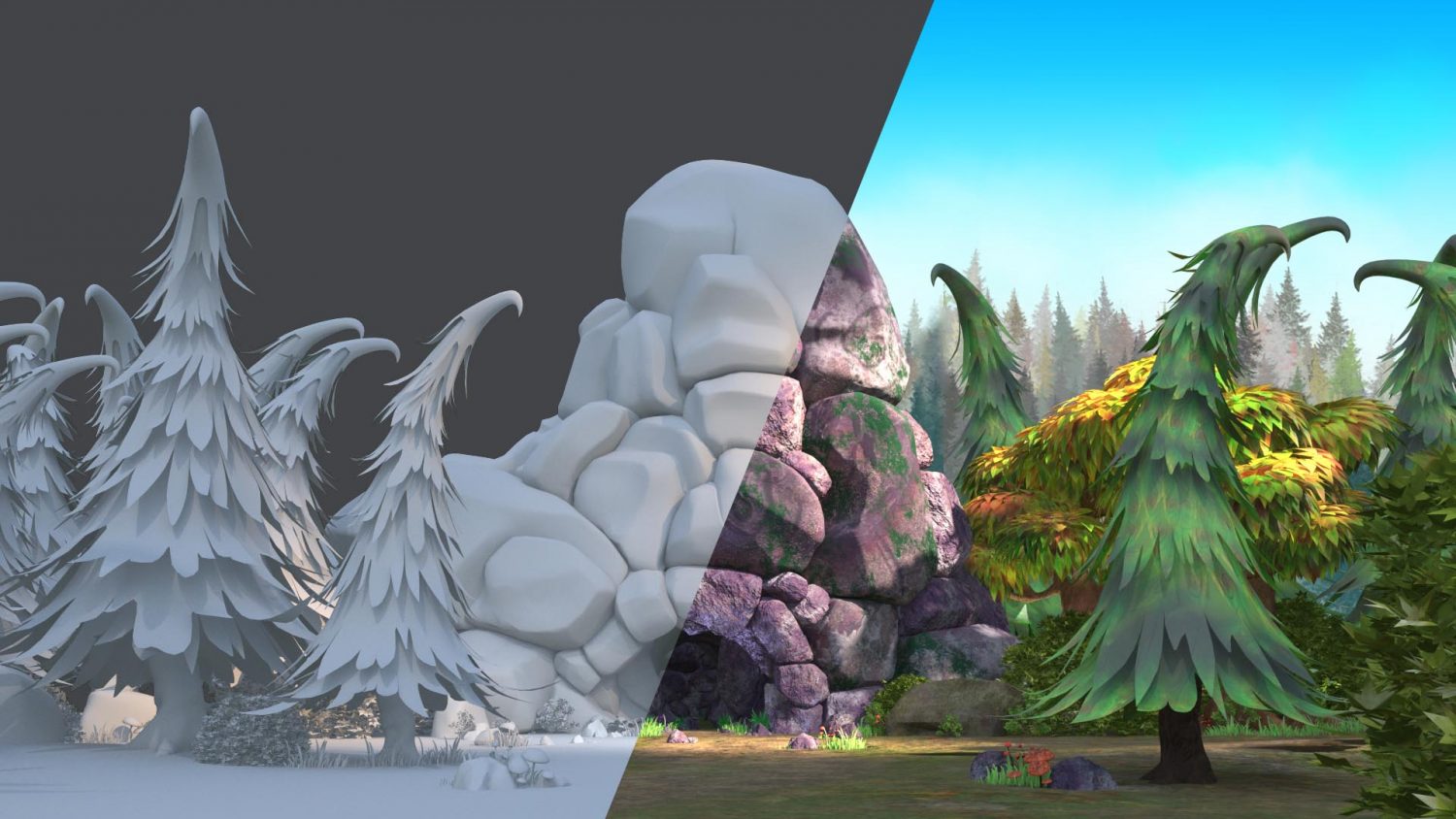
Once the models are created, Texture Artists bring them to life visually. In modern production pipelines, texturing involves much more than simply adding color. Texture Artists work with PBR materials, surface details, roughness, reflections, and realistic material behavior to make assets feel believable and immersive. This role is ideal for artists who pay close attention to small visual details found in the real world.
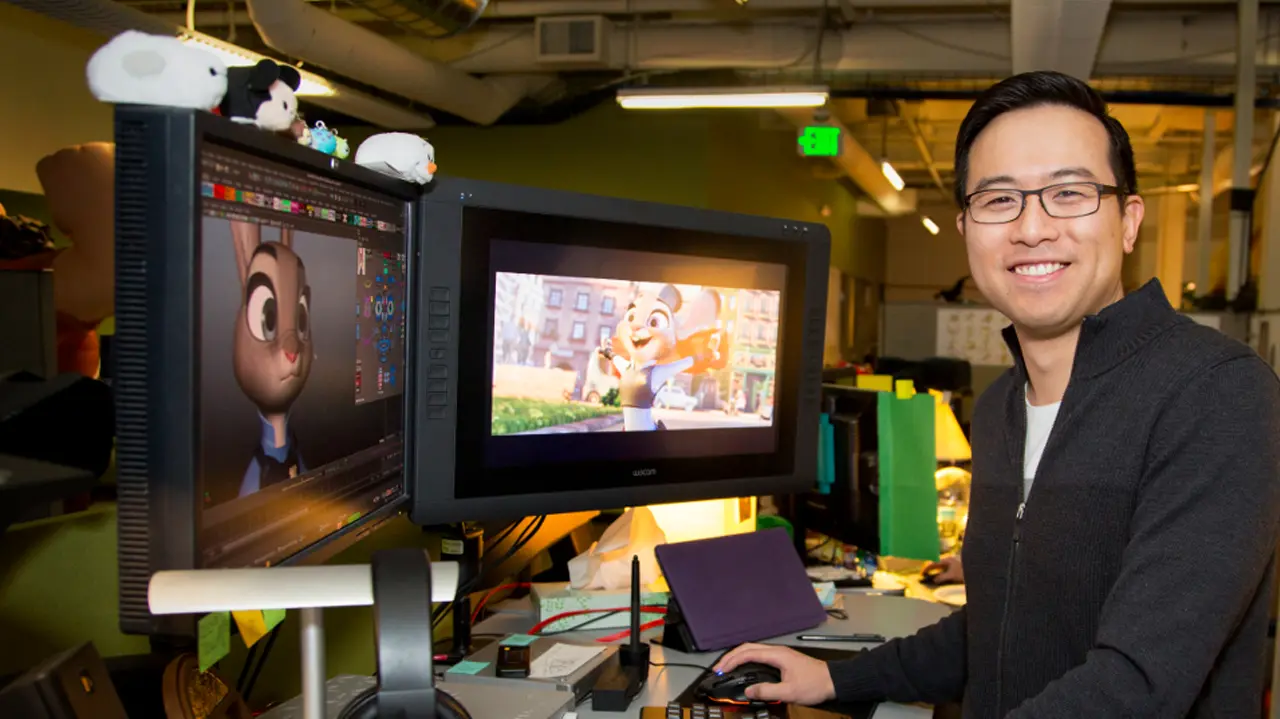
If Modelers and Texture Artists create the body of a character, Animators are the ones who create movement and emotion. Animators give life to characters through motion, facial expressions, acting, and body language. This role is especially suitable for people who enjoy storytelling, studying real-world movement, and creating emotional performances through animation.
Meanwhile, Lighting Artists are responsible for shaping the mood and atmosphere of scenes through lighting design. The same environment can feel completely different depending on how light is used. Lighting Artists often work closely with composition, cinematic storytelling, and visual direction to enhance emotional impact in games and films.

Another highly valued role in the industry today is the FX Artist. FX Artists create simulations and visual effects such as explosions, smoke, fire, water, destruction, magic effects, and environmental dynamics. This role combines artistic creativity with technical problem-solving and is especially attractive to people who enjoy logic, simulations, and large-scale cinematic visuals.

What makes the 3D industry fascinating is that each role functions like a unique “superpower” within the production pipeline. No single position is more important than another because every successful project relies on collaboration between artists, technical artists, and production teams.
Many beginners worry because they are not yet highly skilled or because they have not chosen a specific direction. In reality, nobody enters the industry knowing everything from the beginning. The most important step is identifying personal strengths and following a learning path that aligns with them.
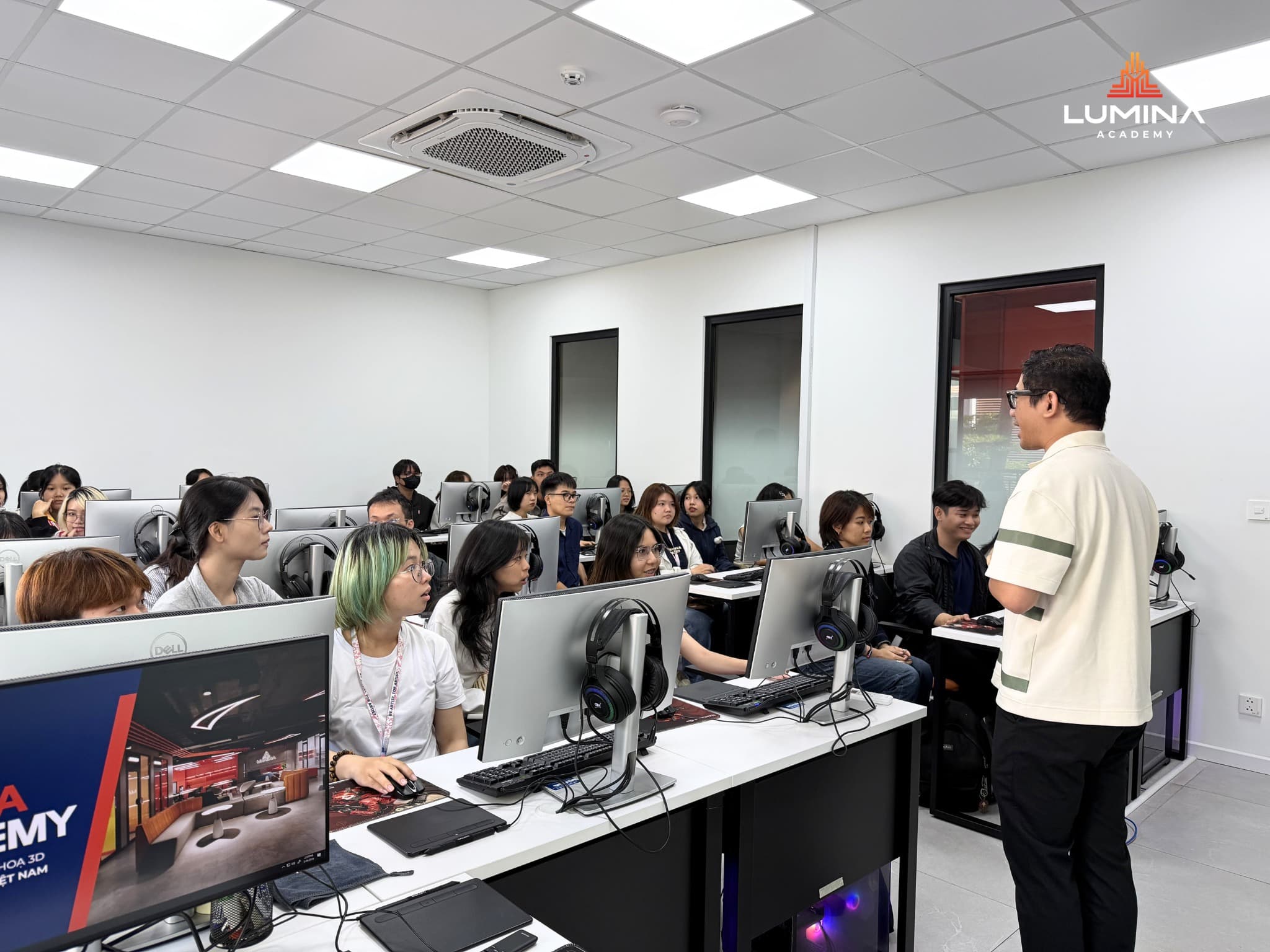
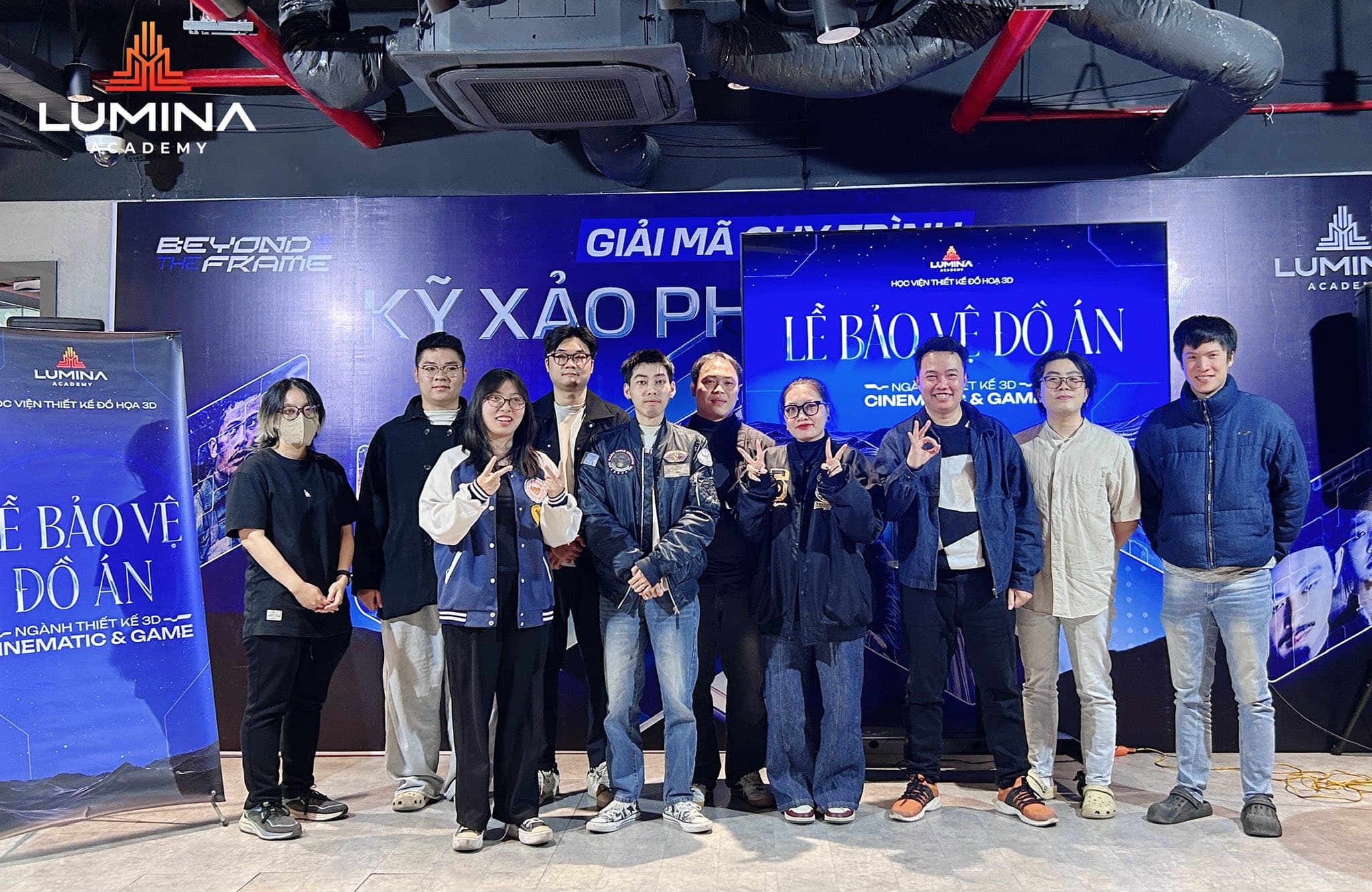
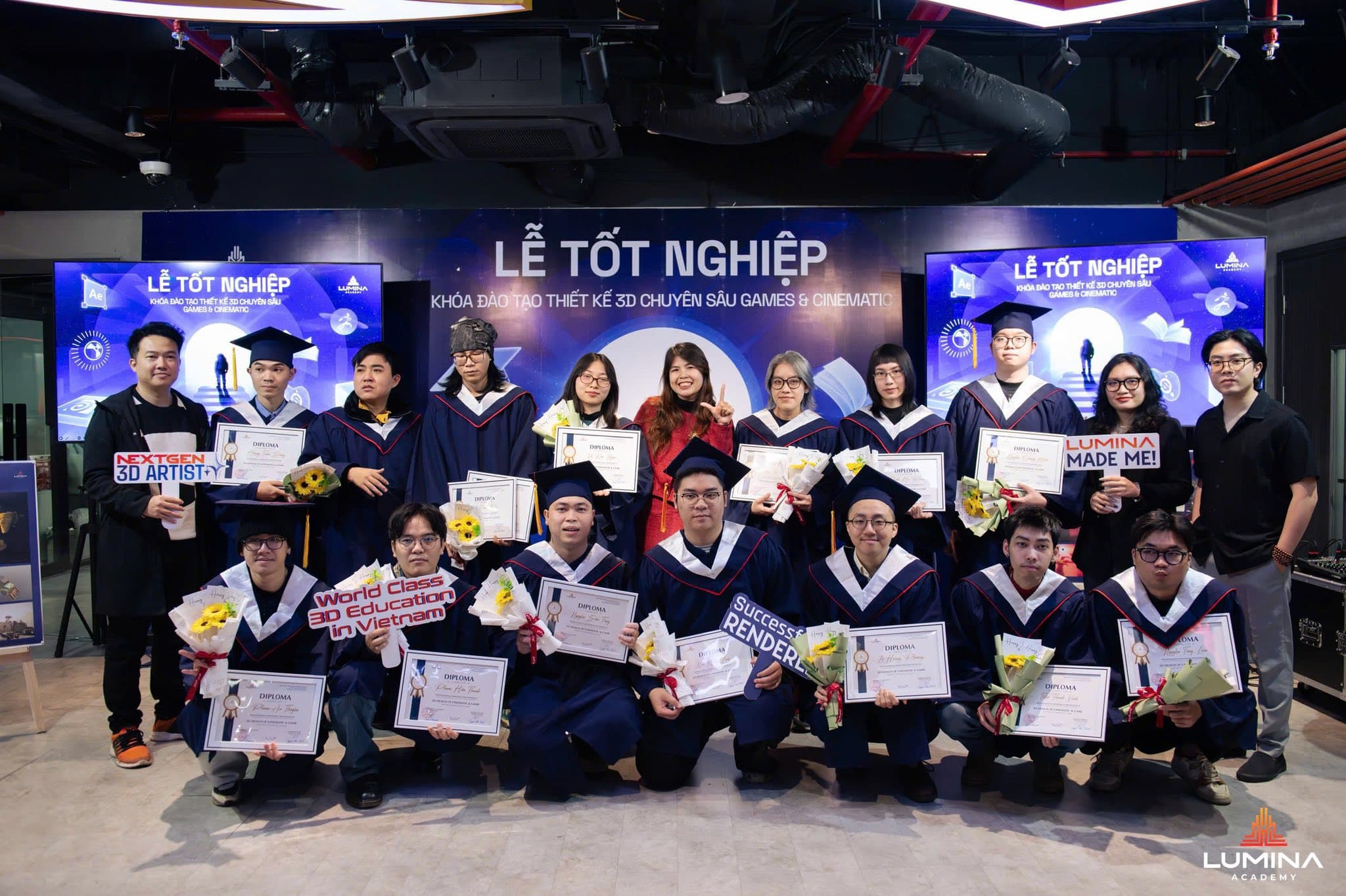
At Lumina Academy, students are guided not only in learning software tools but also in understanding production pipelines and professional career paths within the modern 3D industry. This helps learners build skills with a clear purpose instead of studying randomly without direction.
For anyone still unsure about which role fits them best, exploring the industry through the right learning environment can become the first step toward discovering a meaningful creative career path in the world of 3D production.






Lumina Academy


